
Applied Machine Learning Laboratory
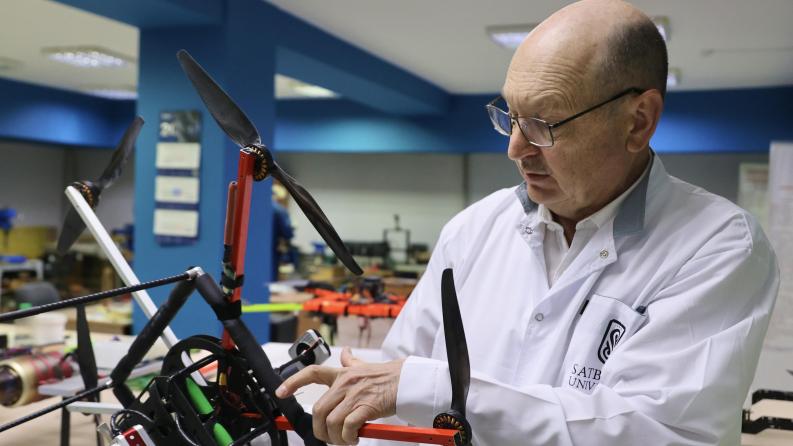
Laboratory Head: Professor Mukhamediev R.I.
1. Laboratory objective
To develop and implement applied machine learning and data analysis methods for solving scientific and practical challenges across various sectors, as well as to train highly qualified specialists and support research in the field of artificial intelligence.
2. Laboratory tasks:
- to develop and adapt machine learning algorithms for applied challenges;
- to collect, process, and analyse data, including through the use of UAVs and remote sensing technologies;
- to create and develop specialised datasets for training and testing models;
- to conduct scientific research and publish results in peer-reviewed journals;
- to develop methodological and educational materials for the educational process;
- to support and supervise the scientific activities of students, master's students, and PhD doctoral students;
- to implement developed solutions in industry, agriculture, and environmental monitoring;
- to develop cooperation with international and national scientific and educational centres, including within the framework of ERASMUS+.
3. Main areas of activity:
- applied machine learning and artificial intelligence;
- processing and analysis of aerial imagery and Earth remote sensing data;
- use of UAVs for data collection and analysis;
- environmental monitoring and analysis of environmental quality;
- analysis of big data and development of intelligent decision-support systems;
- development and implementation of digital solutions for industry and agriculture;
- training of specialists and development of educational programmes in AI and Data Science.
4. Alignment with the UN Sustainable Development Goals (SDGs):
SDG 4 — development of educational and scientific-methodological approaches in the field of machine learning; training of highly qualified specialists and support for young researchers.
SDG 8 — contributing to economic growth through the implementation of innovative AI solutions and the development of digital technology competencies.
SDG 9 — development and implementation of applied machine learning methods and digital technologies for addressing challenges across various sectors of the economy and for the development of innovative infrastructure.
SDG 11 — application of data analysis technologies, UAVs, and remote sensing to improve the sustainability of the urban environment and the quality of life of the population.
SDG 13 — use of machine learning and environmental monitoring methods for the analysis of climate change and in support of environmentally sound decision-making.
SDG 15 — application of remote sensing and AI technologies for monitoring the condition of land resources, ecosystems, and agricultural territories.
SDG 17 — development of international scientific cooperation and partnerships within the framework of educational and research initiatives.