Innovative Engineering Center for the Mining and Metallurgical Complex
Project: BR21881939 Development of resource-saving energy-generating technologies for the mining and metallurgical complex and establishment of an innovative engineering center
Priority Area: Ecology, Environment, and Rational Use of Natural Resources
Implementation Period: 2023–2025
Program: Competition for Program-Targeted Funding of Scientific and (or) Scientific-Technical Programs for 2023–2025
Scientific Supervisor: Kanay Bakhytovich Rysbekov
The project is being implemented at Satbayev University and aims to establish an innovative engineering center for the development and implementation of advanced technologies in the mining and metallurgical complex (MMC).
The center integrates research in the fields of geomechanics, mineral processing, hydro- and pyrometallurgy, nanomaterials, and environmental technologies.
roject Objective
The project aims to establish an innovative engineering center for energy-generating technologies for enterprises of the mining and metallurgical complex, ensuring the development, implementation, and commercialization of technological solutions in the fields of mineral extraction, raw material processing, and environmental safety.
Scientific Novelty
During the project implementation, new methods and technologies have been developed, including:
• an analytical method and software module for automated determination of excavation and loading parameters in open-pit mines and underground mines;
• methods for analyzing the stress-strain state of rocks using the VIC-3D digital image correlation system;
• technologies for the integrated processing of mining and metallurgical waste with the production of new multifunctional inorganic materials;
• technological solutions for the extraction of rare metals and processing of metallurgical slags;
• methods for wastewater treatment and remediation of contaminated soils.
The obtained results contribute to increasing the efficiency of mineral deposit development and reducing environmental impact.
Main Scientific and Technological Results
Technologies have been developed for:
• processing copper slags with recovery of non-ferrous metals;
• extraction of vanadium from complex raw materials;
• beneficiation of oxidized polymetallic ores;
• production of sorption and filtration materials from mining and metallurgical waste;
• production of anticorrosion materials and liquid fertilizers based on manganese ore waste.
Technologies have also been developed for:
• steep lifting of rock mass from deep open-pit horizons based on a skip hoist system and a cross-drive device for dump trucks of different widths, ensuring an increase in transport system productivity up to 24 million tons of ore per year;
• wastewater treatment using the flocculation method;
• phytoremediation of soils contaminated with heavy metals;
• environmental monitoring of industrial territories;
• utilization of mining and metallurgical waste.
The developed technologies ensure reduction of environmental risks and comply with the requirements of the Environmental Code of the Republic of Kazakhstan.
Development of Scientific Infrastructure
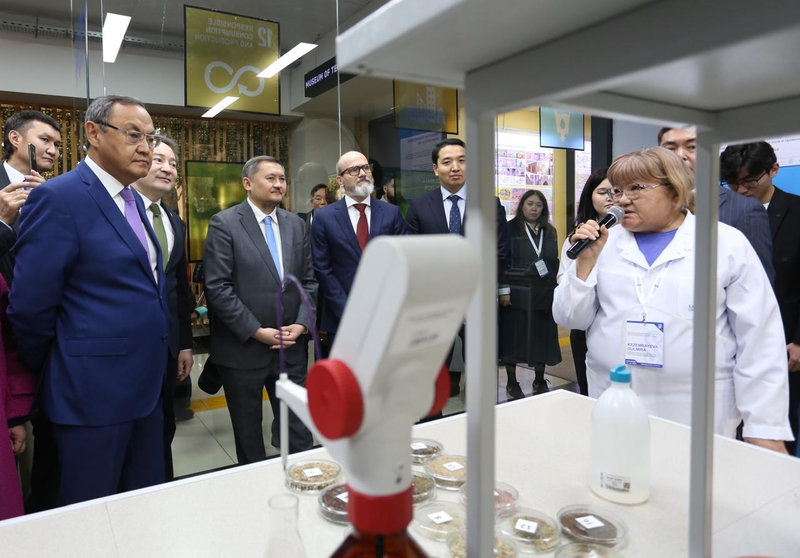
Modern laboratories have been established:
• Laboratory of Digital and Computer Modeling of Ore Mining Technologies from Complex Structural Blocks;
• Laboratory of Geomechanics and Geotechnologies;
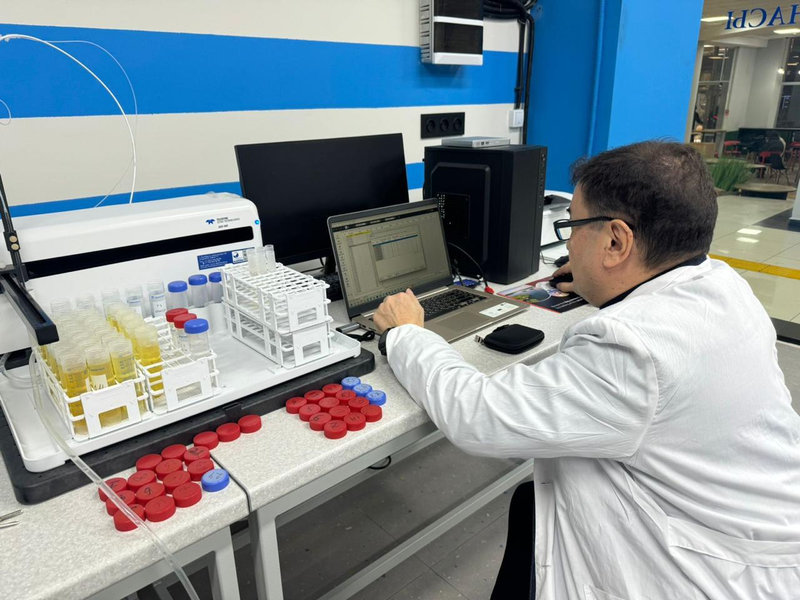
• Laboratory of Chemical and Analytical Research;
• Laboratory for Ore Beneficiation Studies;
• Laboratory of Pyro- and Hydrometallurgical Research Methods;
• Laboratory of Metallurgical Processes, Thermal Engineering, and Powder Metallurgy;
• Laboratory of Nanotechnologies and Nanomaterials;
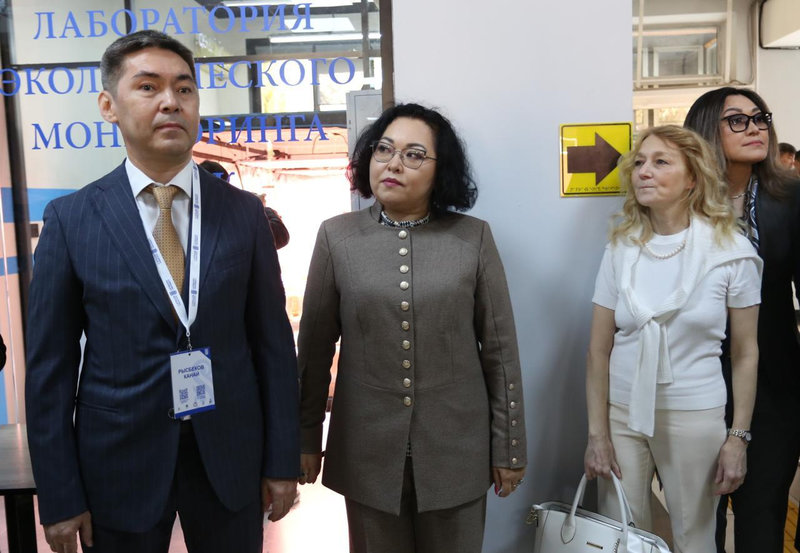
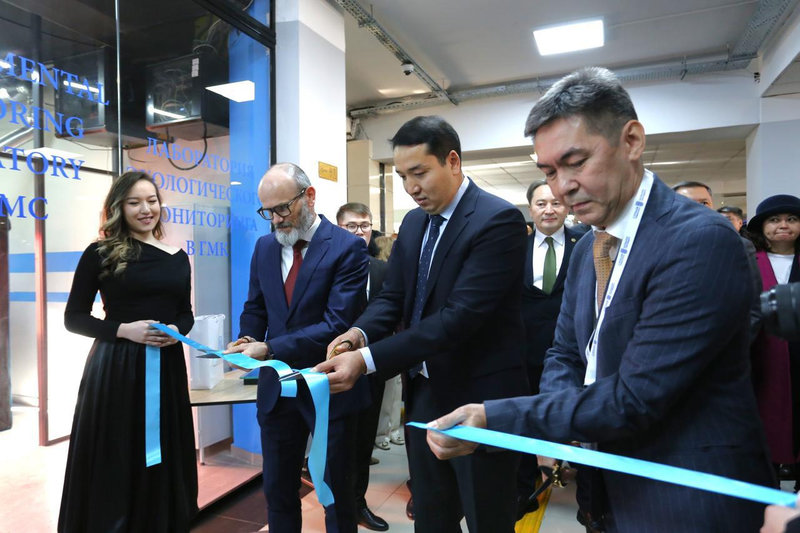
• Laboratory of Environmental Monitoring in the Mining and Metallurgical Complex.
The laboratories are equipped with modern instruments, including:
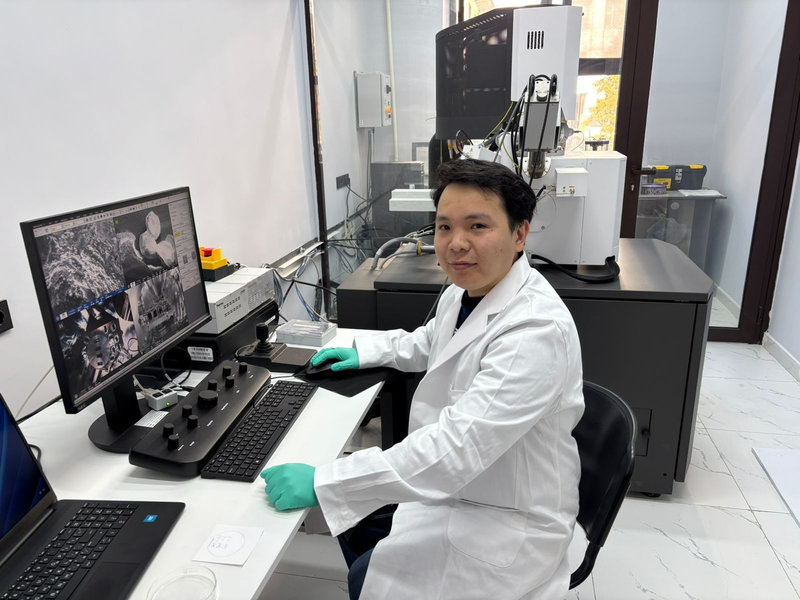
automated servo-hydraulic compression testing system RPS-200; VIC-3D deformation analysis system; Quattro scanning electron microscope; FESEM field emission scanning electron microscope; ICP-OES inductively coupled plasma optical emission spectrometer;
TGA-DTA thermogravimetric and differential thermal analyzer; XRF X-ray fluorescence analyzer; STA 449 F3 Jupiter synchronous thermal analyzer.
Practical Implementation
As a result of the project:
• 4 Derwent patents have been obtained
(https://www.webofscience.com/wos/diidw/full-record/DIIDW:202500938D;
https://www.webofscience.com/wos/diidw/full-record/DIIDW:2025547008;
https://www.webofscience.com/wos/diidw/full-record/DIIDW:2025720380
https://www.webofscience.com/wos/diidw/full-record/DIIDW:202572037N )
• 9 patents of the Republic of Kazakhstan have been obtained;
• 2 software products have been developed;
• 3 startup companies have been registered;
• 8 scientific laboratories have been established;
• 7 technology implementation acts have been obtained.
The total volume of contractual research with industrial enterprises exceeded 1.6 billion KZT.
Scientific Results
Within the framework of the program:
• 10 PhD doctors have been trained;
• 16 articles have been published in Q1–Q2 journals (Web of Science / Scopus);
• more than 20 scientific papers have been published in international and national journals.
Economic Efficiency
The developed technologies enable:
• increasing drilling and blasting and mining efficiency by 10–15%;
• reducing rock mass transportation costs by 1.2–1.5 million USD per year;
• recovering up to 93% of zinc and 76% of copper from metallurgical slags;
• achieving vanadium recovery rates of 82–98%;
• reducing wastewater treatment costs by up to 25%.
Practical Significance
The project results can be implemented at mining and metallurgical enterprises for:
• increasing mineral extraction efficiency;
• processing technogenic waste;
• production of new functional materials;
• environmental modernization of industrial enterprises.
The established engineering center forms a scientific and technological platform for the sustainable development of the mining and metallurgical industry of Kazakhstan.