
AP26198685 – The development of a multipurpose chemi-mechanical technology of purification for filter column and borehole zone on uranium leaching
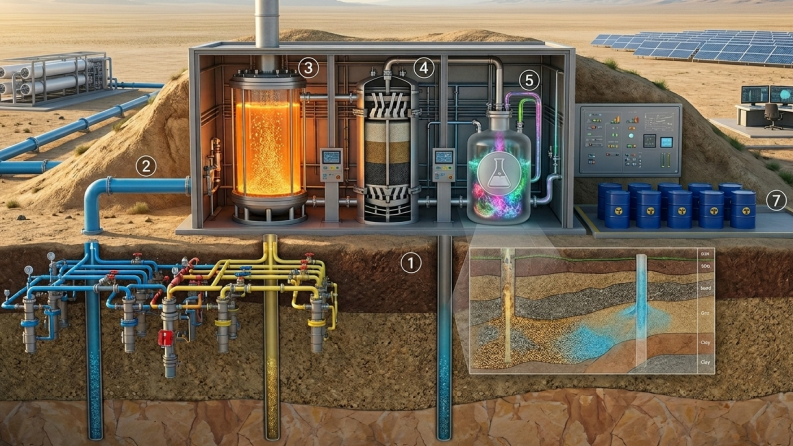
The goal of the project is to expand the efficiency of in situ leaching of uranium by increasing the time between repairs, by creating a universal chemical-mechanical technology for cleaning filters and the near-filter zone of wells from existing types of colmatation.
Relevance: The relevance of this project is determined by the leading position of the Republic of Kazakhstan in global uranium production and the high share of deposits developed using in-situ leaching technology. During the operation of technological wells, their productivity decreases due to clogging of filters and near-filter zones caused by both chemical and mechanical factors. Existing well rehabilitation methods are expensive, technologically complex, and often ineffective, as they do not provide a universal solution for different types of clogging. This leads to longer deposit development periods and increased production costs of uranium. The proposed project is aimed at developing a universal chemical-mechanical technology for well cleaning using low-toxicity reagents and innovative hydrodynamic devices. The implementation of this technology will improve well efficiency, reduce costs, and ensure the sustainable development of Kazakhstan’s uranium mining industry.
Scientific supervisor: Candidate of technical sciences, Associate Professor, Saifilmalik Myrzakhmetov
Expected and achieved results: Within the framework of the project, a detailed analysis of the operation of technological wells and well rehabilitation activities (RWR) was carried out at a uranium mine in the Syrdarya province. The main causes of well productivity decline were identified, including chemical and mechanical clogging, gypsum formation, and clay and sand deposits. Statistical data on the maintenance cycle and productivity of 44 pumping and 46 injection wells were collected and analyzed. It was determined that the maintenance cycle is 32–37 days for chemical treatment and 47–66 days for mechanical treatment. It was also found that about 30% of the wells do not restore their standard productivity after rehabilitation. A comparative analysis of the applied cleaning methods, including mechanical, chemical, and reagent treatments, was conducted. A universal chemical-mechanical technology for cleaning filter columns and near-filter zones was theoretically substantiated. The use of a low-toxicity reagent—ammonium fluoride—was proposed for effective dissolution of quartz clogging formations. A mechanical cleaning principle based on the generation of hydrodynamic shock waves using a special rotating device was developed. A laboratory setup was constructed, and a methodology for experimental studies was developed to validate the effectiveness of the proposed technology.