
AP25794643 – Modernization of the profoundly new cryogenic installation for FTIR-spectroscopic fundamental research of hydrocarbon fuels at atmospheric pressure
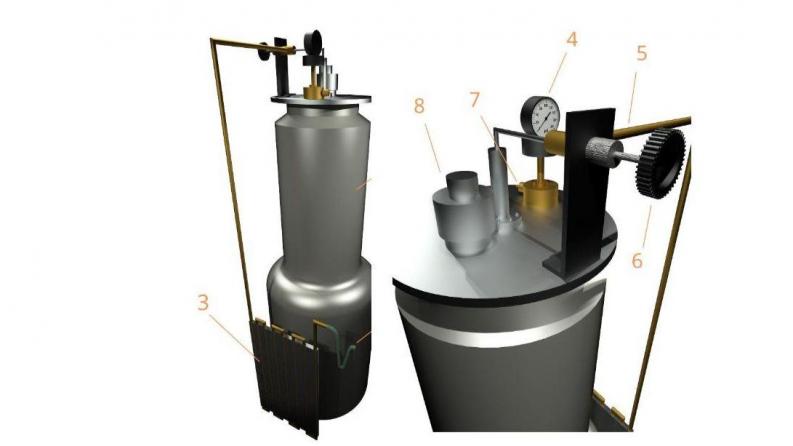
Objective of the project – Modernization of technology and methodology development for FTIR-spectroscopic research to obtain fundamental data on the properties of hydrocarbon fuels at low temperatures (77 K) and atmospheric pressure (101325 Pa, 1 atm.).
Relevance: The relevance of this project is driven by the lack of experimental methods for studying the optical properties of hydrocarbons at low temperatures under atmospheric pressure. Traditional spectroscopic research relies on vacuum conditions to eliminate moisture and impurities, which limits the ability to investigate substances in more realistic environments. As a result, fundamental data on hydrocarbon fuels under atmospheric conditions remain scarce. The project addresses key challenges such as maintaining low temperatures without vacuum, creating an inert and IR-inactive environment, and reducing spectral noise. The proposed FTIR-based approach with a cryogenic-capillary system enables accurate analysis at temperatures down to 77 K while operating at atmospheric pressure. Therefore, the project is highly relevant as it expands experimental capabilities, provides new fundamental data, and improves understanding of hydrocarbon behavior under practical conditions.
Scientific supervisor: PhD, Senior lecturer, Kenbay Alisher Asylbekuly
Expected and achieved results: Significant results have been achieved in the project related to the modernization of the cryogenic-capillary cooling system. A material analysis was conducted, and an effective insulation for the capillaries was selected, ensuring minimal heat loss and stable operation at low temperatures. A rigid fixation system for the capillaries with damping elements was developed and implemented, which reduced vibrations and minimized spectral noise. To improve system mobility, a wheeled platform was designed, simplifying transportation and maintenance. Additionally, a heating element was integrated into the system to provide more precise temperature control of the samples. A metal handle for the sample holder improved the reliability of cell fixation in the spectrometer. A valve was installed to regulate the flow of liquid and gaseous nitrogen, enhancing control over the cooling process. Furthermore, a height adjustment system was developed to ensure proper positioning of the cell and to obtain high-quality IR spectra.