
AP09058297 – Development of a new waste-free technology for the disposal of hot-dip galvanizing waste with the integrated extraction of valuable components
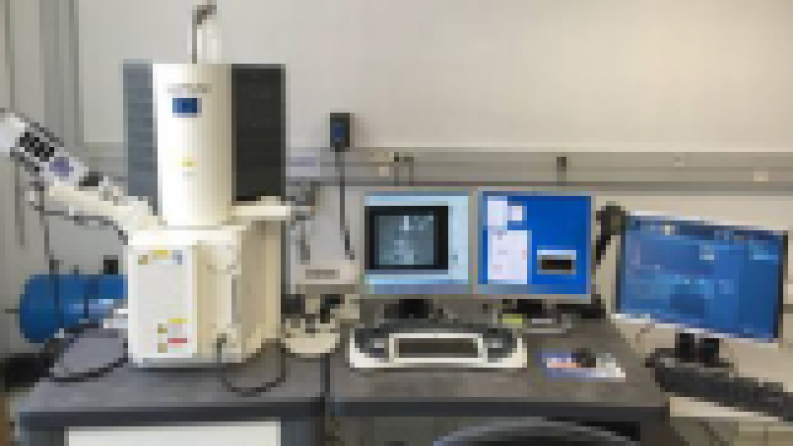
Purpose: Creation of a new resource-saving, environmentally friendly, waste-free technology for processing ash to produce commercial products with high added value: compact metal ingots of zinc and pure zinc oxide powder of high quality (“know-how”), suitable for the preparation of food additives for animal and bird feed.
Relevance: The problem of protecting metal from corrosion is one of the most important technical problems. Among the large number of well-known methods of protection against corrosion is hot-dip galvanizing. The high price of zinc, which is a major cost in galvanizing, requires the economical use of zinc and the disposal of its waste, in particular, ash. The yield of burnt is from 0.5 to 3.5% of the mass of skipped products. It contains up to 30-40% of metallic zinc. The complex chemical composition of ash makes it difficult to further use it. When processing ash, it is of great importance to study the behavior of lead, as one of the main impurities that hinders its further use. The results of the work do not give an unambiguous picture of lead removal. There are no data on minimizing the lead content in the metallized and non-metallic part of the ash. The forms of occurrence of zinc, lead and other impurity metals in oxide-metallized melts, which form the basis of ash, have not been studied. The questions of the mechanism of distribution of lead between the products of smelting the metal part and the chlorinating processing of the non-metal part of the ashes remain open. Of great interest for practice is the development of a highly efficient technology for the processing of ash with the complex extraction of zinc and its oxide into commercial products.
Scientific supervisor: Ph.D., Associate Professor, Koishina Gulzada
Results obtained: The study focused on optimizing technological parameters and improving key stages of zinc waste processing. It was established that the use of a CaCl₂ and NH₄Cl mixture enables the production of high-quality zinc oxide with minimal impurities. The effectiveness of preliminary separation of dross into metallic and oxidized fractions followed by separate processing was demonstrated. Optimal thermal treatment conditions for each fraction were determined, ensuring the production of pure metallic zinc and high-grade oxide. Based on experimental results, optimal roasting parameters such as temperature, duration, and reagent consumption were defined. A waste-free integrated processing scheme was developed, along with calculations for industrial-scale implementation. The results confirm the high economic efficiency and strong potential for practical application of the proposed technology.
List of publications with links to them
- Койшина Г.М., Жолдасбай Е.Е., Курмансейтов М.Б., Тажиев Е.Б. Выбор и обоснование технологии комплексной переработки изгари с получением товарных продуктов // Труды университета КарТУ. – 2021. – № 1. – С. 87–93. – DOI: 10.52209/1609-1825_2021_3_87.
- Koishina G.M., Zholdasbay E.E., Kurmanseitov M.B., Tazhiev E.B., Argyn A.A. Study on the behavior of zinc and associated metal-impurities in the process of chlorinating roasting of dross // Kompleksnoe Ispol’zovanie Mineral’nogo Syr’a. – 2021. – № 3. – P. 71–80. – DOI: 10.31643/2021/6445.30.
- Dosmukhamedov N.K., Kaplan A., Zholdasbay E., Koishina G., Tazhiev Ye., Argyn A., Kuldeyev Ye., Kaplan V. Processing of dross of hot-dip galvanizing by chlorinating roasting // Sustainability. – 2021. – Vol. 13. – P. 12530. – DOI: 10.3390/su132212530.
- Zholdasbay E., Kaplan A., Koishina G., Tazhiyev Ye., Argyn A., Dosmukhamedov N. Method of hot-dip galvanizing dross processing with obtaining marketable products // Труды университета КарТУ. – 2022. – № 1 (86). – С. 34–40.
- Жолдасбай Е.Е., Койшина Г.М., Тажиев Е.Б., Досмухамедов Н.К., Ичева Ю.Б. Технологические опыты по переработке изгари с получением товарных продуктов // Вестник КазНИТУ. – 2022. – № 1. – С. 11–16. – DOI: 10.51301/ejsu.2022.i1.02.
- Койшина Г.М., Жолдасбай Е.Е., Каплан А.В., Досмухамедов Н.К. Переработка металлической фракции изгари хлорированием // Вестник КазНИТУ. – 2022. – № 6. – С. 5–10. – DOI: 10.51301/ejsu.2022.i6.01.
- Досмухамедов Н.К., Жолдасбай Е.Е., Курмансейтов М.Б., Койшина Г.М., Каплан А. Хлорирующий обжиг окисленной составляющей, полученной из изгари при Т = 1000 °С // Металлург. – 2022. – № 3. – С. 85–91. – DOI: 10.52351/00260827_2022_03_85.
- Dosmukhamedov N.K., Zholdasbai E.E., Koishina G.M., Kaplan A.V., Kurmanseitov M.B., Tazhiev E.B. Chlorination roasting of oxidized component obtained from dross at a temperature of 1000 °C // Metallurgist. – 2022. – Vol. 66, Issue 3–4. – P. 335–342. – DOI: 10.1007/s11015-022-01333-y.
- Койшина Г.М., Тажиев Е.Б., Аргын А.А., Каплан В.А. Выбор технологического оборудования для комплексной переработки изгари // Вестник КазНИТУ (Engineering Journal of Satbayev University). – 2023. – № 5. – С. 31–38. – DOI: 10.51301/ejsu.2023.i5.05.