
AP27511659 – Experimental and Numerical Investigation of Pulsatile CO₂ Injection Effects on Sequestration Efficiency in Real Rock Formations
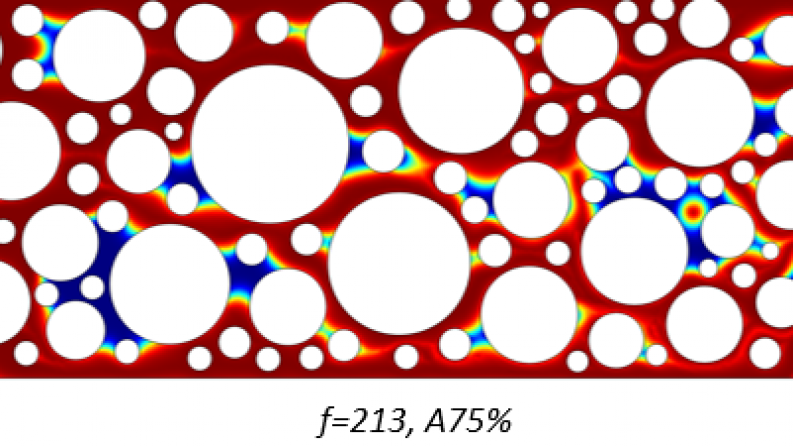
Objective of the project – The primary objective is to evaluate the effects of pulsatile injection on the displacement of residual fluid initially in place (e.g., water or oil) through advanced numerical simulations and experimental studies at the pore scale.
Relevance: This project investigates pulsatile CO₂ injection into underground rock formations to improve the efficiency of geological CO₂ sequestration and residual fluid displacement. Previous studies using the Lattice Boltzmann Method showed that pulsatile injection can enhance CO₂ penetration by 1.5–16%, but lacked experimental validation and real porous media data. To address this, the project combines numerical simulations with experiments on heterogeneous carbonate rocks using CT and SEM imaging. The study analyzes how pulsatile injection affects residual saturation and examines key parameters such as porosity, tortuosity, relative permeability, and surface area. The expected outcome is the development of optimized CO₂ injection strategies for various geological conditions, advancing CCS technologies. The project will strengthen Kazakhstan’s scientific capacity and contribute to climate change mitigation and international competitiveness. Its results have strong practical potential, including commercialization, improved oil recovery, and reduced greenhouse gas emissions.
Scientific supervisor: Ph.D., Akasheva Zhibek
Expected and achieved results: The expected outcomes include the development of optimized CO2 injection strategies applicable to diverse geological settings, contributing to more efficient and commercially viable carbon capture and storage (CCS) technologies. By correlating experimental data with numerical simulations, the study aims to deepen understanding of the complex interactions occurring within geological formations.