
AP26199207 – Bioengineered digital design and innovative production of personalized and unified plates for osteosynthesis
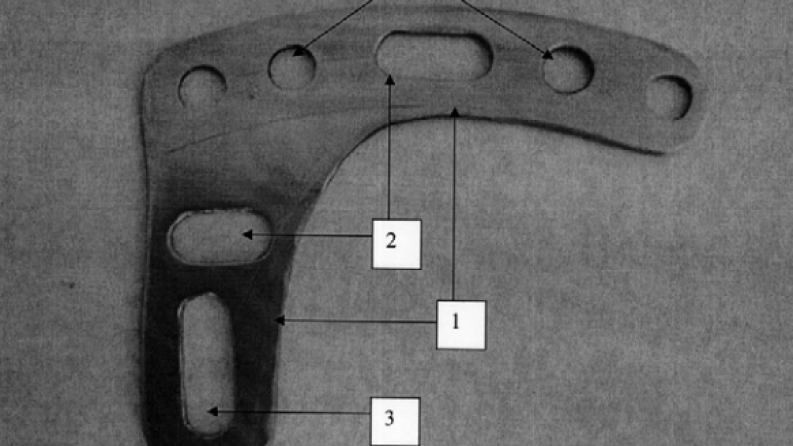
Objective of the project – to develop and biomechanically optimize the design of unique anatomical plates for osteosynthesis in fractures of limb bones, as close as possible in terms of elasticity properties to the elasticity of human bone. The optimization of metal plates will be carried out considering the complexity of the geometry, the criteria of strength, elasticity and metal consumption. An important stage of the project will be the organization of production of such plates at Kazakhstani plants in order to replace expensive foreign analogues.
Relevance: The relevance of this project is determined by the high demand for effective and affordable solutions for the treatment of limb bone fractures, especially in the context of an aging population. Modern imported anatomical plates for osteosynthesis are expensive and do not always consider the individual anatomical characteristics of patients. The development of domestically produced biomechanically optimized plates, with elasticity properties close to that of human bone, will improve treatment efficiency and reduce the risk of complications. The use of digital technologies and bioengineering design enables more precise modeling and adaptation of structures for different parts of the skeleton. This is particularly important for elderly patients, whose bone regeneration processes are slower. In addition, organizing the production of such products in Kazakhstan will contribute to import substitution, reduce healthcare costs, and support the development of the national medical industry.
Scientific supervisor: Candidate of technical sciences, Associate Professor, Isametova Madina Esdauletova
Expected and achieved results: Within the framework of the project, 10 CAD models of the joints of the distal radius and ulna of patients aged 60–80 were generated and processed based on MRI scans using the Mimics software package. As a result of the modeling, the average curvature parameters of the distal radius and proximal ulna were determined. Based on these data, an optimized design of anatomical plates was developed, considering the geometry of contact with the joint surface and cortical bone layer. The optimal curvature radii of the T-shaped plate were established as 18 mm for the outer edge and 13 mm for the inner edge, with an average anatomical curvature of approximately 16–18 mm. Various fixation configurations were analyzed, and a design with five distal screws was identified as optimal. Design documentation was developed for two types of plates intended for osteosynthesis of the humerus and radius. A numerical analysis of the stress-strain state was carried out, stress concentration zones were identified, and contact stress diagrams in the “plate–bone” system were obtained. Comparative analysis showed that T-shaped and V-shaped plates have better biomechanical characteristics than the π-shaped plate, with the T-shaped design demonstrating the lowest deformation. Optimized designs of titanium anatomical plates with a thickness of 2 mm, five distal screws, and curvature radii of 16–18 mm were obtained. Using FFF technology, prototypes of the plates and bone models were manufactured, achieving high geometric accuracy with a gap of no more than 0.2 mm, confirming the effectiveness of the proposed approach.