
AP26196937 – Developing innovative methods to improve mine stability during underground redevelopment by examining the impact of explosive loads on rock mass
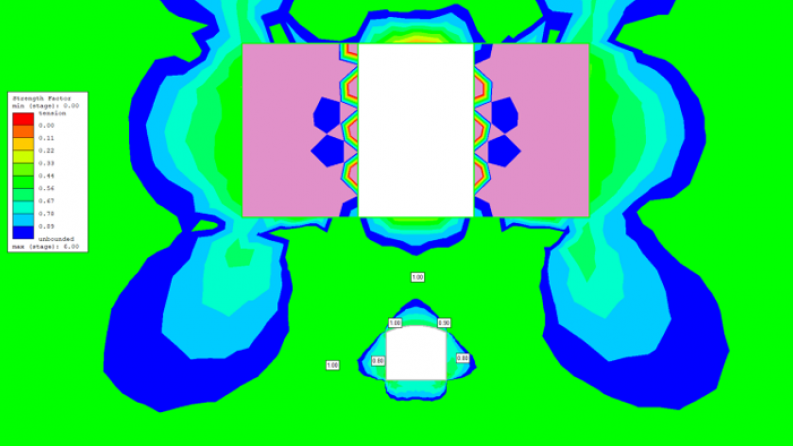
Objective of the project – Developing innovative methodologies to enhance the stability of mine workings during re-mining. This will be achieved by examining the negative impact of static and dynamic loads on mine workings and analyzing the stress-strain state of supports in mined-out voids.
Relevance: The relevance of the project is driven by the need to improve the efficiency of mineral resource utilization under conditions of depletion of surface reserves and the transition to repeated mining of deposits. Long-term operation of underground mines leads to the accumulation of residual stresses and a decrease in the stability of mine workings. Additional risks arise from seismic impacts caused by mass blasting, which increase the likelihood of failures and accidents. Existing methods for assessing and ensuring stability often do not account for real conditions, including the presence of underground voids and the spatial location of blasting operations. This results in reduced prediction accuracy and increased operational risks. Therefore, there is a need to develop innovative approaches that ensure safe and efficient operation of underground mine workings.
Scientific supervisor: Candidate of technical sciences, Associate Professor, Serdaliyev Yerdulla
Expected and achieved results: Based on the results of the first stage of the project, a comprehensive analysis of the geomechanical conditions of the Zhezkazgan and Maleevskoye mines was conducted, allowing the systematization of key rock parameters. The ranges of physical and mechanical properties were determined, including density of 2.8–3.0 t/m³, deformation modulus of 22–26 GPa, cohesion of 6–6.5 MPa, and internal friction angle of 41–43°, as well as stress levels (σv = 7–10 MPa, σh = 5–8 MPa). The obtained data formed the basis for establishing initial coefficients required for subsequent numerical modeling of mine stability. A comparative analysis of 28 support technologies showed that the most effective solution is a combined system using modified fiber-reinforced concrete and fiberglass anchors. It was established that this system provides a 20–25% increase in the stability of mine workings compared to conventional solutions. The modified fiber-reinforced concrete demonstrated higher strength (30–32 MPa in compression and about 5 MPa in tension), exceeding that of standard shotcrete. It was also found that the use of lightweight materials reduces support weight by 25–30%, decreases material consumption by up to 15%, and lowers labor intensity by 15–18%, while simultaneously improving the stability of mine workings.