
AP26104957 – Synergistic Beamforming and Duplexing: Leveraging Intelligent Surfaces, Full-Duplex, and Machine Learning for Enhanced Sensing, Communication, and Security
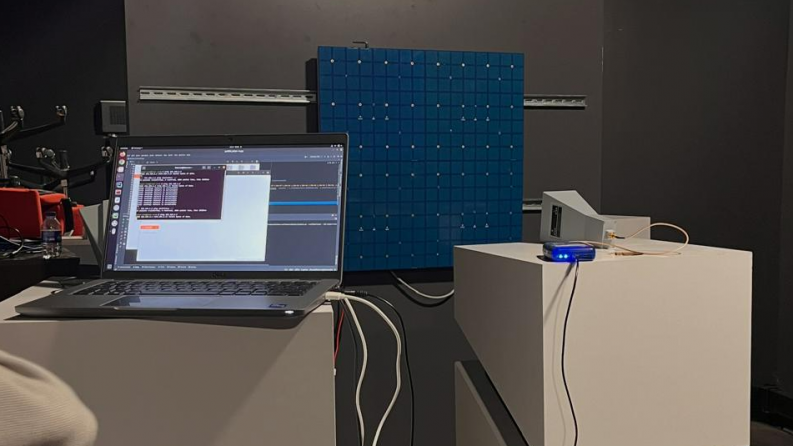
Objective of the project – The main goal of this research project is to design, develop, and evaluate a full-duplex integrated Sensing and Communication Network (ISAC), supported by reconfigurable intelligent surfaces (RIS). The project aims to implement highly efficient and secure communication systems, optimized in terms of spectrum and energy usage. These systems will meet the requirements of future 6G networks.
The project will develop an analytical and algorithmic framework, using both traditional and machine learning (ML)-based optimizations. It will also implement the framework in hardware. Using RIS and the deployment of multiple RIS units, the project aims to enhance the probing capabilities of ISAC networks. This will significantly increase data transfer speeds and ensure communication security by blocking unauthorized users.. In addition, the project will establish a specialized training center in the telecommunications sector of Kazakhstan to educate professionals in advanced 5G technologies. This dual approach will establish new standards for network performance and education in the telecom industry, providing training for skilled personnel capable of operating with the most advanced technologies. The anticipated outcomes will enable Kazakhstan to assume a leading role in 5G research and innovation, contributing to the creation of a technologically sophisticated and secure communications infrastructure with significant implications for both domestic and global telecommunication industries.
Relevance: The rapid development of 6G and the growth of data traffic require new solutions to improve the efficiency, speed, and security of communications. In this context, integrated sensing and communication (ISAC) systems, as well as full-duplex transmission and reconfigurable intelligent surfaces (RIS), are becoming highly relevant, as they enable efficient spectrum utilization and better control of the radio environment.
Additionally, the use of machine learning methods plays an important role in enhancing the performance of such systems. For Kazakhstan, the project is also relevant in terms of developing scientific capacity and training qualified specialists in advanced telecommunications.
Scientific supervisor: Zhandos Makhshutuly Dosbayev, PhD, Associate Professor
Expected and achieved results:
The project aims to accomplish the following objectives:
at least 3 (three) articles and (or) reviews in peer-reviewed scientific publications in the scientific area of the project, indexed in Science Citation Index Expanded and included in the 1st (first), 2nd (second) and (or) 3rd (third) quartiles by impact factor in the Web of Science database and (or) having a percentile by CiteScore in the Scopus database of at least 60 (sixty);
at least 2 (two) articles or reviews in a peer-reviewed foreign or domestic publication recommended by the Committee for Quality Assurance in Science and Higher Education;
One of the articles will be of the category - multidisciplinary (multidisciplinary or interdisciplinary practical application)
or at least 2 (two) articles and (or) reviews in peer-reviewed scientific publications indexed in Science Citation Index Expanded and included in the 1st (first) and (or) 2nd (second) quartile by impact factor in the Web of Science database and (or) having a percentile by CiteScore in the Scopus database of at least 70 (seventy);
at least 2 (two) articles or reviews in a peer-reviewed foreign or domestic publication recommended by the Committee for Quality Assurance in Science and Higher Education;
One of the articles will be of the category - multidisciplinary (multidisciplinary or interdisciplinary practical application)
or at least 1 (one) article or review in a peer-reviewed scientific publication indexed in Science Citation Index Expanded and included in the 1 (first) quartile in the Web of Science database or having a CiteScore percentile in the Scopus database of at least 90 (ninety).
at least 1 (one) article or review in a peer-reviewed foreign or domestic publication recommended by the Committee for Quality Assurance in Science and Higher Education;
One of the articles will be of the category - multidisciplinary (multidisciplinary or interdisciplinary practical application)
Within the scope of this project, it is anticipated that one PhD student will complete their training and successfully defend their dissertation.
The team is also committed to showcasing the project's impact through presentations at prestigious conferences (as listed in Scopus or Web of Science), as well as through recognition in project-related publications, patents, commercialization efforts, and high-quality creative outputs. These publications will serve as tangible proof of the project's scholarly contributions and will greatly enrich the existing knowledge in the field of wireless communications.
To reach a broad audience, the team has developed a comprehensive communication strategy, which includes the following actions:
- The PI will establish and maintain a dedicated project website, which will act as a hub for sharing public information, facilitating communication, and promoting collaboration with both the general public and other research and industry initiatives in relevant sectors.
- To raise scientific awareness, the PI will visit local universities to inspire students to pursue research careers and encourage them to explore postgraduate studies. Additionally, the PI will engage in technical seminars and workshops to build networking connections with researchers in related fields.
Furthermore, the project will involve the extensive training of four Ph.D. students and one postdoctoral fellow at Satbayev University, which is a key component of this proposal. In conclusion, the combined expertise and dedication of the research team, along with a robust research methodology and comprehensive dissemination strategy, will significantly amplify the project's impact in the academic community, making a substantial contribution to the advancement of wireless communication technologies.
1. A comprehensive literature review on reconfigurable intelligent surfaces (RIS) and machine learning methods was conducted. As a result, state-of-the-art approaches to RIS-based beamforming, self-interference suppression techniques in full-duplex (FD) mode, RIS+FD synergy, and a classification of ML-based control algorithms were developed.
2. A comparative analytical study of modern solutions for integrated beamforming architectures was carried out. The advantages, limitations, computational complexity, and experimental feasibility of existing methods were evaluated. Key technological challenges in adaptive control using RIS and ML were identified.