
AP26100473 – Study of Cascade Solar Thermal Energy Storage Efficiency in Solid-State Heat Accumulators using Phase Change Materials for Domestic Applications in Continental Climate Conditions
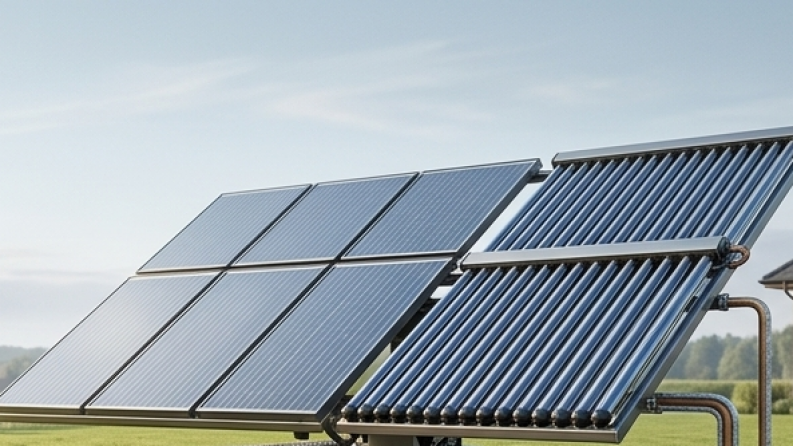
Objective of the project – The aim of the project is to identify efficient charging and discharging modes for a solid-state thermal accumulator with a cascaded arrangement of phase-change materials (PCM) using the developed numerical calculation model. Additionally, the project seeks to determine optimal charging and discharging modes for a storage-type thermal accumulator with a cascaded PCM configuration, based on the developed heat balance model and previous experimental setup.
Relevance: Under the conditions of Kazakhstan’s continental climate, characterized by sharp daily and seasonal temperature fluctuations, there is a need for efficient storage and utilization of solar thermal energy. Existing heat supply systems are characterized by low heat storage efficiency and high energy losses. The use of phase change materials (PCMs) and cascade thermal storage systems can significantly improve energy efficiency, ensure stable heat supply, and reduce dependence on conventional energy sources. Therefore, the development and optimization of such systems represent a relevant scientific and technical task.
Scientific supervisor: Toleukhanov Amankeldy Eleshevich, PhD in Mechanics, Associate Professor
Expected and achieved results:
The project will generate new scientific data on cascade STES using PCM adapted to continental climate conditions. Optimal PCM materials will be selected, and improved geometric configurations for both solid-type TES will be developed. These findings will benefit the scientific community and engineers working with solar thermal systems. The developed TES solutions can be applied to daily solar energy storage in solar heat pump and water heating systems, as well as in industrial applications for large-scale hot water storage.
The project will start at TRL 1, with plans to achieve TRL 3 through calculations, experiments, and prototype testing to confirm the effectiveness of the technologies.
The project outcomes will meet the requirements for natural sciences and applied research fields as specified in point 7 of the tender documents.
As part of the proposed project, at least one Doctor of Philosophy (PhD) or Doctor of Science in the relevant research area of the project will be trained.
1.1 Modeling of the thermal characteristics of various tank designs using phase change materials (PCMs) was carried out. The main focus was on calculating thermal efficiency, heat transfer rate, and temperature distribution.
1.2 The effects of heat transfer fluid flow rate, inlet and outlet parameters, and temperature profiles on the efficiency of thermal systems were investigated. Appropriate temperature profiles and optimal flow rates were established, which improved heat transfer processes and reduced energy losses, thereby increasing the overall system efficiency.
1.3 Efficient charging and discharging modes for the tank-based thermal energy storage system were studied using the previously developed experimental setup.
1.4 Various finned and porous structures of containers filled with phase change materials were investigated to evaluate their effectiveness in enhancing heat transfer.
The novelty of the work in 2025 lies in obtaining new data on the thermal characteristics of tank-based thermal storage systems with cascade arrangement of phase change materials (PCMs), as well as in the numerical and experimental investigation of the influence of container geometry, finned and porous structures, and heat transfer fluid flow parameters on the efficiency of charging and discharging processes. For the first time, optimal design solutions and refined heat and mass transfer models are being developed, forming the basis for the creation of an improved thermal energy storage system in the coming years.