
AP23489821 – Geological-geochemical, microthermometric studies of oil-generating formations and new resources’s forecast of south-eastern side of Precaspian syneclise and Ural Mugodzhar
Objective of the project – The purpose of work is aimed at determining paleothermobaric regimes, main sources of generation and directions of migration flows of hydrocarbon compounds, patterns of distribution promising oil and gas accumulation zones within Precaspian syneclise’s southeastern side and Sakmara, Zilair zones of Southern Urals’s Mugodzhar.
Relevance: The objective of the study is to determine paleothermobaric regimes, hydrocarbon generation centers, and migration pathways, as well as to identify promising zones of oil and gas accumulation on the southeastern margin of the Precaspian Basin and within the Sakmar and Zilair zones of the Mugodzhary. The lack of major field discoveries over the past 15–25 years (except for the Caspian shelf) indicates the limitations of traditional geological methods, while oil and gas source rocks remain insufficiently studied. The research is based on a comprehensive study of organic matter, oils, and rocks using petrographic, pyrolytic, and chromatographic analyses, as well as microthermometry of fluid inclusions. The expected results will enable the reconstruction of the region’s thermobaric history and allow for the accurate identification of source rocks and hydrocarbon generation zones. The project outcomes will contribute to a deeper understanding of the geological evolution of the Precaspian Basin and the Mugodzhary region, as well as improve the efficiency of oil and gas exploration. In addition, the research will strengthen scientific capacity, support the training of young researchers, and facilitate publication in international scientific journals. From a practical perspective, it will contribute to the expansion of the country’s mineral resource base, economic growth, and increased export potential.
Scientific supervisor: Ph.D., Professor, Yensepbayev Talgat
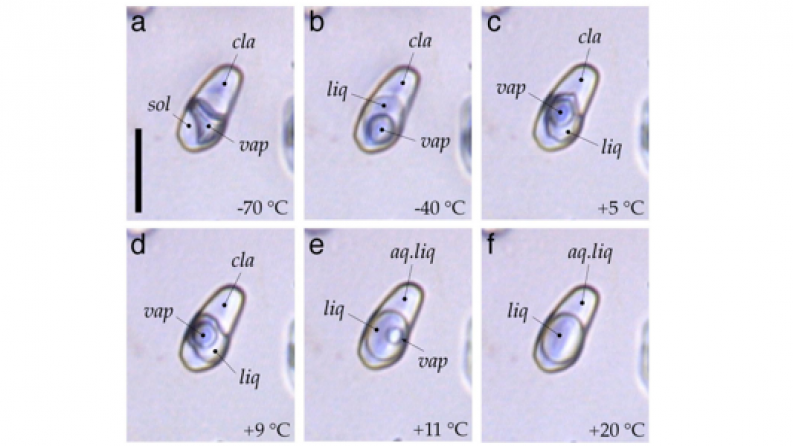
Expected and achieved results: Geodynamic and sedimentation models of the Upper Paleozoic complex of the eastern and southeastern margins of the Precaspian Basin and the Mugodzhary zone of the Southern Urals have been developed, and the main oil and gas source strata have been identified. Geological, geophysical, archival, and literature data were systematized, which made it possible to refine the tectono-geodynamic, sedimentological, and geochemical models of the region. It has been established that the Sakmar zone represents a major tectonostratigraphic unit—an accretionary-thrust belt between the East European Platform and the Ural fold system, reflecting evolution from rifting and oceanic spreading to subduction, collision, and orogeny. Field expeditions were carried out in the Aktobe Cis-Urals and the Sakmar zone of the Mugodzhary, during which 39 rock samples of various ages and compositions were collected. Geochemical studies were performed using extraction, gas chromatography, biomarker GC–MS, Rock-Eval pyrolysis, as well as XRD and XRF analyses. It was established that the most перспективные oil and gas source rocks are the shales of the Upper Devonian Kiin Formation, as well as, partially, carbonate and argillaceous strata of the Sholaksay, Meridional Ridge, and Aidarlyasha sections. A number of samples showed signs of hydrocarbons, including residual and biodegraded ones, while biomarker analysis revealed differences in the genesis and maturity of organic matter. Microthermometric study of fluid inclusions in rock crystals, applied for the first time in Kazakhstan on such a scale, made it possible to reconstruct paleoconditions of “pressure–temperature–composition” and identify features of the region’s thermobaric regimes. It was found that the formation of fluid inclusions in Silurian and Devonian rocks is mainly associated with the Carboniferous period, when flows of thermal waters of varying temperatures were active. Some limestones are characterized by homogenization temperatures of 100–120 °C, corresponding to elevated geothermal gradients of 35–50 °C/km and mainly related to the Carboniferous stage. It was shown that volcanism, deep faults, and subduction and collision processes had a significant impact on the formation of thermobaric conditions. Inorganic geochemical indicators confirmed a transition of depositional environments from oceanic and deep-water anoxic to shallow-water oxygenated and regressive conditions. It was revealed that the enrichment of organic matter in the Kiin Formation was controlled by transgression, hydrothermal activity, upwelling, and deep-water anoxia. Sedimentological zones were correlated with tectonic elements, and potential zones of hydrocarbon accumulation and migration associated with fault and thrust systems were identified. As a result, the integration of geodynamic reconstructions, geochemical data, and fluid inclusion analysis made it possible to refine the evolution of the regional petroleum system and to identify potential generation centers and migration pathways of hydrocarbons. A manuscript has been prepared for submission to a Scopus-indexed journal (not lower than Q3).