
AP23489740 – Research salt precipitation's impact on CO2 injection wells injectivity and improvement of salt precipitation model for effective CO2 sequestration
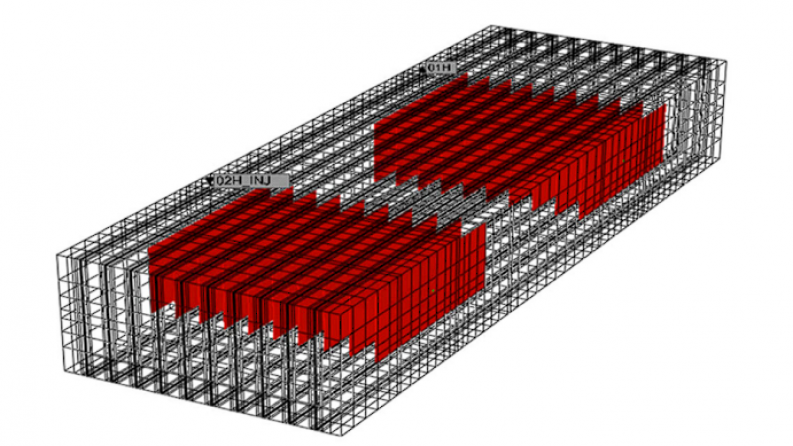
Objective of the project – This project aims to gain insights into salt precipitation dynamics in CO2 sequestration in saline aquifers. Building on existing studies of brine drying processes and salt behavior in porous structures, it focuses on real reservoir complexities to enhance effective carbon capture strategies.
Relevance: Underground geological storage of CO₂ is an effective method for reducing greenhouse gas emissions; however, injection into saline aquifers leads to the redistribution of brine. Under reservoir conditions, high temperature and pressure enhance water evaporation into the CO₂ phase, causing salt drying and precipitation within the porous medium. Pore clogging significantly reduces reservoir permeability and impairs well injectivity. The complexity and heterogeneity of porous media complicate the quantitative study of salt precipitation processes and may induce reverse capillary flow, leading to uneven salt distribution. The kinetics of the process are influenced by pore geometry, wettability, injection rate, and brine composition. A key challenge is to understand how pore-scale processes affect permeability and salt distribution at the macroscopic level. The main objective of the research is to obtain fundamental knowledge about salt formation dynamics during CO₂ sequestration, with a focus on drying mechanisms and salt behavior in heterogeneous porous structures. Despite existing studies, their results are limited and not universally applicable to different geological conditions. Recent data confirm the significant influence of rock heterogeneity and factors such as capillary counterflow and salinity on salt precipitation processes. The results will contribute to optimizing safe CO₂ storage technologies and reducing their environmental impact.
Scientific supervisor: Ph.D., Gussenov Iskander
Expected and achieved results: A description of salt structure formation was obtained, showing that their growth and densification lead to clogging of the pore space. Visualization (CT and microscale) revealed the stages of nucleation, coalescence, and densification of polycrystalline aggregates, which predominantly block pore throats and reduce channel connectivity, accompanied by an increase in pressure drop and a decrease in conductivity. A literature review of 102 sources confirmed that salt precipitation during CO₂ injection can reduce rock permeability by 30–86%, especially in near-wellbore zones, and in sandstones from 150 mD to less than 50 mD. It was established that the type of precipitates (carbonate, halide, sulfate) is determined by chemical reactions, temperature, CO₂ phase state, and brine salinity. Optimal conditions for the formation of stable salt structures and the dependence of drying rate on crystal size were determined. Experiments with micromodels showed that salt saturation in heterogeneous media reaches ~9.5% (compared to ~5.3% in homogeneous media), while reverse capillary flow enhances localized crystallization and permeability reduction. Mesoscale patterns were identified: under slow evaporation, precipitates are distributed uniformly, whereas rapid drying leads to the formation of localized crystallization zones in low-permeability regions. Quantitative analysis revealed a fractal dimension of precipitates in the range of 1.6–1.8 and a reduction of effective permeability to 45–60% of the initial value under local salt accumulation. These results refine salt precipitation models and confirm the key role of porous medium heterogeneity in crystallization processes and injectivity loss.
List of publications with links to them
- Zhumakhanova N., Sepehrnoori K., Delikesheva D., Ismailova J., Khagag F. Reservoir Simulation of CO₂ Flooding vs. CO₂ Huff-and-Puff in Shale Formations: Comparative Analysis of Storage and Recovery Mechanisms // Energies. – 2025. – Vol. 18. – No. 13. – Art. 3337. – DOI: https://doi.org/10.3390/en18133337
- Khagag F.S., Delikesheva D.N., Ismailova D.A., Zhumakhanova N.E., Kaidar A.M., Khusainova A.R. Review of mechanisms and multiscale investigations of salt precipitation in porous media under CO₂ injection conditions // Нефть и газ. – 2025. – № 5 (149). – С. 109–125. – DOI: https://doi.org/10.37878/2708-0080/2025-5.07