
AP23489493 – Monitoring of micro/nanoplastics in surface waters of Almaty and Astana and the use of membranes for their removal
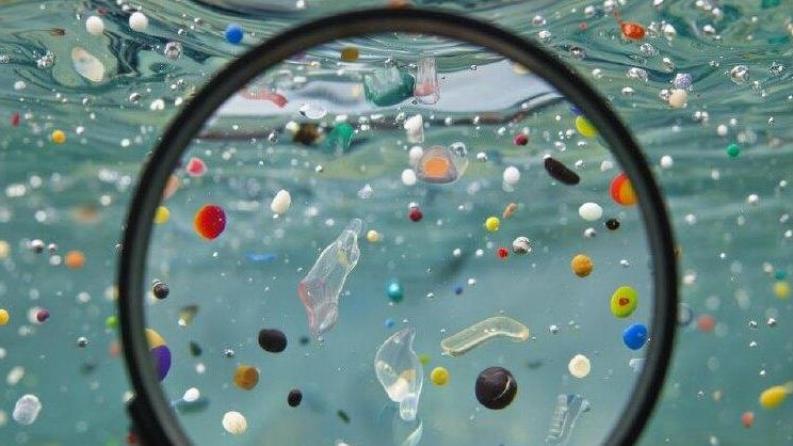
Objective of the project – conduction monitoring of micro/nanoplastics in surface waters of Almaty and Astana, evaluation of membranes effectiveness for their removal and detection Bisphenol A in bottled water.
Relevance: The main source of plastic pollution in the biosphere is anthropogenic activity: approximately 8.3 billion tons of plastic have been produced worldwide, of which 6.4 billion tons have been discarded. Plastic waste degrades into micro- and nanoplastics (MNPs) smaller than 0.5 mm, which contaminate the environment—especially water resources—and affect human health. The project aims to monitor MNPs in surface waters of the cities of Almaty and Astana, where such studies have not previously been conducted. The novelty lies in obtaining data on MNP content in natural waters and, for the first time, determining the concentration of bisphenol A in bottled water. The results obtained will be used for environmental monitoring by governmental authorities. The implementation of the project does not require significant costs, as the methods used are simple and accessible, which is particularly important for regions with limited resources. The project is aimed at studying the problem of microplastic pollution in Kazakhstan’s water bodies and identifying solutions to address it. The research is of high importance for assessing water quality, environmental protection, and improving water treatment technologies while considering risks to human health.
Scientific supervisor: Doctor of Biological Sciences, Aliya Sataeva
Expected and achieved results: In accordance with the project schedule, sampling, storage, transportation, and preparation for analysis of water and bottom sediment samples from surface sources in Almaty and Astana were carried out. A total of 103 samples were collected from 4 sources in the vicinity of Astana and 7 sources in Almaty, with water samples taken monthly from January to October 2025. All surface water samples were collected in 2-liter dark glass bottles, stored at −4 °C, while bottom sediments were collected from a depth of 2 cm along riverbanks and reservoirs at multiple points simultaneously with water sampling. Sampling and sample preparation were conducted in strict accordance with regulatory standards and a modified multi-stage NOAA methodology, including sieving, drying, peroxide oxidation of organic matter, density separation, and visual sorting using a microscope. Morphological and chemical identification of microplastics was performed using light microscopy, Raman spectroscopy, FTIR, SEM-EDX, TEM, ion chromatography, HPLC, as well as Malvern Zetasizer and Mastersizer 3000 instruments. The analysis of samples included characterization of microplastics by shape, size, color, polymer composition, and concentration, allowing the identification of temporal, seasonal, and spatial distribution patterns depending on water body type, underlying surface, flow velocity, and seasonal factors. The results showed that fibers, particles, and fragments are the main forms of pollution, with fibers predominating in Astana rivers and particles in Almaty rivers. The highest concentration of particles in Almaty was detected in the Shanyrak area (58 particles/L), while the highest fiber concentration was found in the Esentai River near KazNU (21 particles/L). In Astana, maximum concentrations were recorded in the Ishim River near Kyzylzhar (26 particles/L) and in the Nura River near Arshaly and Manshuk villages (19 and 33 particles/L, respectively). Upper areas of Almaty (Gorny Gigant and Khan-Tengri districts) showed no significant microplastic pollution due to high flow velocity and low anthropogenic impact. It was established that microplastic distribution is directly correlated with anthropogenic pressure, particularly in areas receiving wastewater and stormwater runoff and in densely urbanized zones. In total, 144 liters of water were analyzed, containing 410 microplastic units: 43.4% particles, 54% fibers, and 2.7% fragments, with black and transparent particles being dominant. Analysis of surface and bottled water for bisphenol A using HPLC showed its absence in river water and in all initial bottled water samples. However, a derivative of bisphenol A was detected in ARSU bottled water after heating to 30–50 °C for 6 hours, which may indicate contamination of raw materials, production processes, or the use of non-food-grade plastics. Laboratory experiments on the removal of micro- and nanoplastics from model solutions using 3D-printed ceramic membranes demonstrated removal efficiencies ranging from 20% to 62.2%, and up to 100% for particles sized 460–825 nm, confirming the high potential of membrane technologies for water purification. As a result of the project, a scientific article was published in the journal Polymer (Q1, Web of Science, Scopus), and researchers completed international training at Kingston University and presented their findings at scientific events, confirming the scientific novelty and practical significance of the work.
List of publications with links to them
- Kamal A., Yergeldinov B., Nygmetova D., Satayeva A., Kim J., Poulopoulos S., Gitis V., Arkhangelsky E. The investigation of chemical cleaning of polymeric UF membranes: effect of temperature // Polymer. – 2026. – Vol. 342. – Article 129310. – DOI: https://doi.org/10.1016/j.polymer.2025.129310
- Сатаева А., Камал А., Байменов А., Ким Д., Архангельски Е., Тастамбек К.Т., Тауанов Ж.Т., Акимбеков Н.Ш. Краткий обзор проблемы загрязнения микро-нанопластиком сточных и поверхностных вод Казахстана // Вестник КазНУ. Серия Экологическая. – 2024. – № 4 (81). – С. 112–117. – DOI: https://doi.org/10.26577/EJE.2024.v81.i4.a11