
AP23485820 – Improving the signal quality and prediction accuracy of a portable cardiac analyzer in the diagnosis of heart diseases
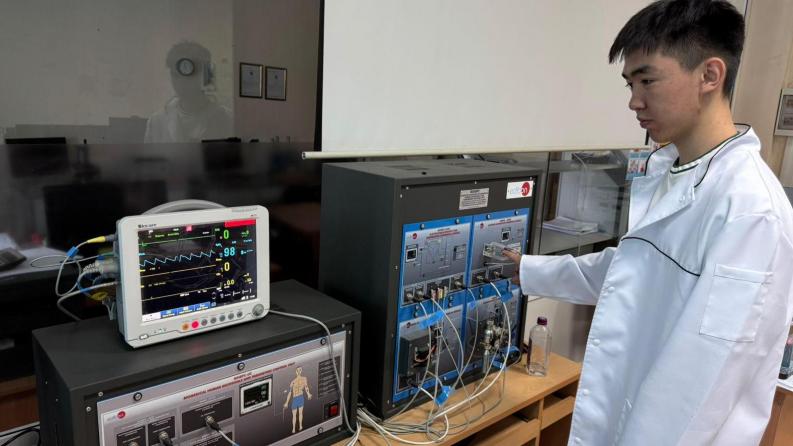
Objective of the project – Improvement of a non-invasive cardiac diagnostic system previously developed by the authors for diagnosing more complex heart diseases based on intelligent processing of the ECG signal.
Relevance: The relevance of the project is determined by the need to improve methods for diagnosing cardiovascular diseases under conditions of patients’ daily activity. The previously developed non-invasive cardiological system allows monitoring of heart condition outside clinical settings; however, it requires further improvement in the accuracy and informativeness of the obtained data. One of the key tasks is to reduce noise and enhance filtering methods of electrocardiographic signals to ensure more reliable results. Modern trends in medicine involve the active use of artificial intelligence technologies for more accurate detection of complex heart pathologies and localization of myocardial damage. The detection of difficult-to-diagnose conditions, such as different stages of myocardial infarction, is particularly important. This requires the development of effective neural network models, the creation of specialized databases, and the design of training algorithms. Thus, the project is aimed at improving the quality of diagnostics and early detection of cardiovascular diseases, which is crucial for reducing mortality and improving public health.
Scientific supervisor: Candidate of Technical Sciences, Professor, Ozhikenov Kassymbek Adilbekovich
Expected and achieved results: During the implementation of the project, new methods and algorithms for noise-resistant processing of ECG signals were developed to improve the accuracy of cardiovascular disease diagnostics. An analysis of the main sources of noise was conducted, and based on this, filtering algorithms using adaptive filters and wavelet transformation were created, which significantly improved signal quality without loss of diagnostic information. Algorithms for the automatic detection of informative ECG segments were developed, including identification of R-peaks and QT and ST intervals, ensuring high accuracy and stability in identifying diagnostically significant parts of the signal. In addition, methods for ECG signal segmentation into P, QRS, and T components based on time and frequency analysis were developed and tested, improving the quality of heart rhythm analysis. Algorithms for automatic noise level assessment were created, enabling quantitative evaluation of noise and adaptive adjustment of filtering parameters. A neural network-based method for ECG signal analysis was developed for the classification of cardiac abnormalities, including arrhythmias and ischemia, demonstrating high efficiency in clinical testing. The architecture of neural networks was optimized, including the number of layers and activation functions, and data preprocessing procedures such as normalization and artifact removal were implemented. The model was trained on an extended clinical dataset and showed high sensitivity (over 90%) and specificity (over 88%). Decision rules were developed for determining the localization of myocardial infarction based on ECG signals, enabling accurate identification of affected areas. The algorithms were tested on independent datasets, confirming their robustness to noise and signal variability. A non-invasive cardiodiagnostic system was developed and implemented, including server-side and client-side components with real-time data analysis capabilities. Algorithms for processing, storing, and visualizing cardiac signals were implemented using modern web technologies and REST architecture. A server-side system with a database and streaming data processing algorithms, as well as a client-side adaptive web interface for user interaction, were developed. As a result, a functional system ready for practical application and further development was created. Based on the research results, a patent application for the developed portable cardiodiagnostic system was prepared and submitted in the Republic of Kazakhstan.