
AP19679690 — Development of composite materials based on carbon nanotubes and magnetite nanoparticles for use as a radio-absorbing material for microwave radiation
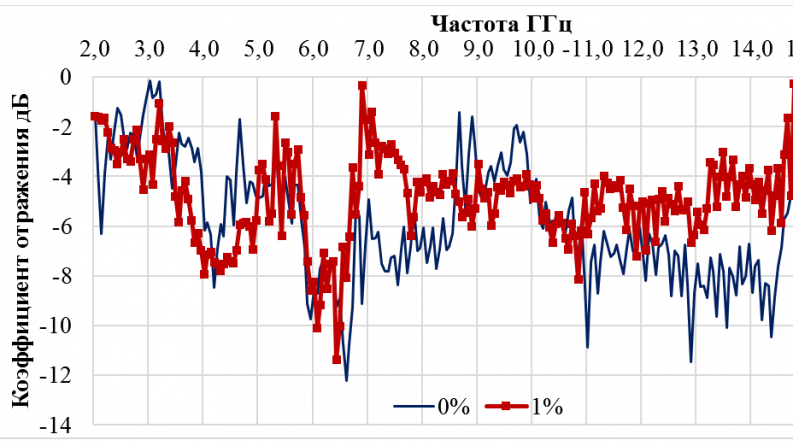
Objective of the project: The goal of this project is to develop and optimize composite materials based on carbon nanotubes and magnetite nanoparticles in order to create an effective radio-absorbing material for microwave radiation. The project is aimed at studying the synergistic effects that arise when combining carbon nanotubes with magnetite, in order to increase the efficiency of absorption and dissipation of electromagnetic energy in the microwave frequency range.
Relevance of the project: The relevance of the project related to the development of composite materials based on carbon nanotubes and magnetite nanoparticles for use as radio-absorbing material for microwave radiation is emphasized by several important factors: With the development of communication technologies, wireless networks, radio communications, as well as with the expansion of the use of microwave technologies in medicine and telecommunications and other fields, there is an increasing need for effective materials to absorb and dissipate radio frequency and microwave radiation. It is important to protect information from unwanted interception and interference, especially in military and commercial applications where privacy is key. The development of effective radio-absorbing materials is becoming a critical issue. The development of such materials can find application in various fields, including defense, telecommunications, medicine, aviation, space industry and much more. All these factors make the project to develop composite materials based on carbon nanotubes and magnetite extremely relevant and promising for modern scientific and technical research.
Scientific supervisor: Doctor of Ph.D., Associate Professor, Aidos Lesbaev
Results obtained: Within the project, nanosized magnetite particles were synthesized using chemical condensation and solution combustion methods, exhibiting superparamagnetic properties. A comprehensive analysis of their structure and size was carried out using transmission electron microscopy and the BET method. The influence of magnetite nanoparticle concentration on microwave attenuation characteristics of composite materials was studied. Optimal nanoparticle concentrations обеспечing maximum absorption and a broader attenuation range were identified. Magnetic fibers were fabricated by electrospinning with controlled morphology and porous structure. The results demonstrate the potential of magnetite nanoparticles for use in shielding composite materials based on various matrices.
List of publications with links to them
- Кайдар Б., Лесбаев А., Имаш А., Басканбаева Д., Акалим Д., Кенешбекова А., Енсеп Е., Ильянов А., Смагулова Г. Наночастицы магнетита, полученные методом жидкофазного горения // Горение и плазмохимия. – 2023. – Т. 21, № 3. – С. 147–157. https://doi.org/10.18321/cpc21(3)147-157
- Kaidar B., Imash A., Smagulova G., Keneshbekova A., Kazhdanbekov R., Yensep E., Akalim D., Lesbayev A. Magnetite-Incorporated 1D Carbon Nanostructure Hybrids for Electromagnetic Interference Shielding // Nanomaterials. – 2024. – Vol. 14. – 1291. https://doi.org/10.3390/nano14151291
- Лесбаев А., Акалим Д., Ережеп Д. Исследование наноструктурированных композитных волокон на основе Fe₃O₄ // Journal of Open Systems Evolution Problems. – 2024. – Т. 26, № 2. – С. 25–36. https://peos.kaznu.kz/index.php/peos/article/view/336
- Lesbayev A., Akalim D., Kalauov B., Yerezhep D. An Investigation into Fe3O4 Nanoparticle-Based Composites for Enhanced Electromagnetic Radiation Shielding // Journal of Composites Science. – 2025. – Vol. 9. – 226. https://doi.org/103390/jcs9050226