
AP09259251 – Studying the deterioration of permeability at the micro and macro levels in activities to stimulate production
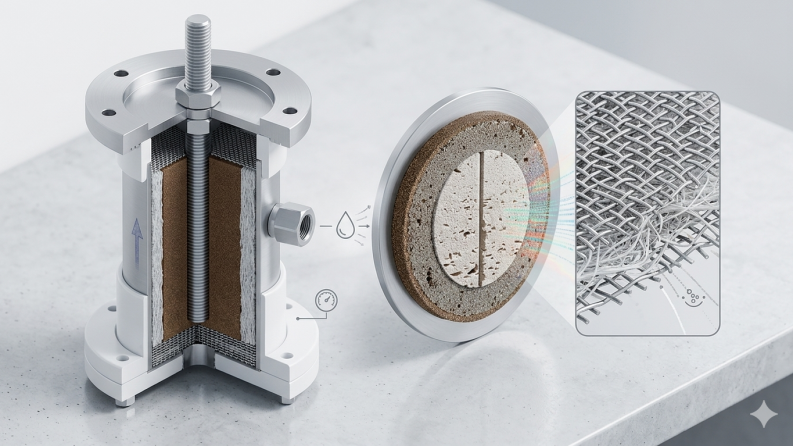
Goal of the work: The purpose of this project is to investigate the mechanisms of micro- and macro-level permeability degradation caused by process fluids and oil stimulation additives, as well as to determine the optimal fluid formulations and develop practical recommendations for subsoil users to maintain increased well productivity and prevent / minimize reservoir permeability deterioration.
Relevance of the work: Microfluidics is an advanced field of science, and micromodels are widely used in medicine, microbiology, pharmaceuticals, as well as in hydrology and petroleum engineering. For example, Zhang et al. (2018) demonstrated the results of studies in which the effectiveness of drugs in various artificially grown tissues of human organs was tested on microfluidic devices [6]. Abate et al. (2013) developed a DNA sequencing tool based on microdroplet manipulation that speeds up sequencing and minimizes the use of reagents [7]. In oil and gas research, Molla and Mostowfi (2017) developed a microfluidic PVT model to investigate the relationship between saturation pressure and oil phase state [8]. Gaol et al. (2019) studied microbiological methods for enhanced oil recovery of micromodels [9]. To the best of our knowledge, there have been no studies on microfluidics for enhanced oil recovery and stimulation in Kazakhstan. However, Bolashak Fellow and PhD doctoral student Kenzhekhanov (2016) conducted relevant research work at the Colorado School of Mines (USA), and studied the effect of surfactants on the behavior of oils in a porous medium [10]. Gussenov et al. (2019), on the other hand, showed the behavior of polymer gels in cores and the need to understand the factors that influence the stability of such fluids in complex systems. Considering the limitations of both laboratory setups, the research team proposes an innovative approach to improve the accuracy and reliability of micro- and macro-scale measurements. Integration of microfluidics with filtration experiments on core samples will provide reliable and inexpensive, ready-to-use results.
Scientific supervisor: PhD, Gusenov Iskander
Results obtained: The conducted study demonstrated that gel-polymer systems significantly reduce rock permeability to both water and oil due to pore channel blockage. It was found that without prior isolation of oil-saturated zones, their application may negatively affect oil production. The incorporation of fibers into the gel reduces chemical consumption by up to 40% without loss of efficiency, while shortening dissolution time accelerates the treatment process. Practical recommendations were developed for applying gel-polymer systems and restoring oil permeability using NaOH solution. Implementation of the results can reduce well treatment costs by up to 20%. The novelty of the work lies in the integration of microfluidic methods to visualize filtration processes at the microscale.
List of publications with links to them
- Kenzhekhanov S., Yin X., Gussenov I. Microfluidic study of polymer permeability reduction mechanisms // Proceedings of the SPE Annual Technical Conference and Exhibition. – 2022. – October.
- Gussenov I. Literary review: permeability alterations in sandstone after acidizing // Energy Reports. – 2023. – Vol. 9. – P. 6328–6348.
- Gussenov I. The effect of polymer mixing time on the strength of HPAM-Cr(III) gels // Eurasian Chemico-Technological Journal. – 2023. – Vol. 25.
- Gussenov I., Seright R. Permeability reduction techniques: HPAM-fiber vs. plain gels in fractured cores // Geoenergy Science and Engineering. – 2023.