
AP08957241 – Development of polymer-metal multilayer nanocatalysts
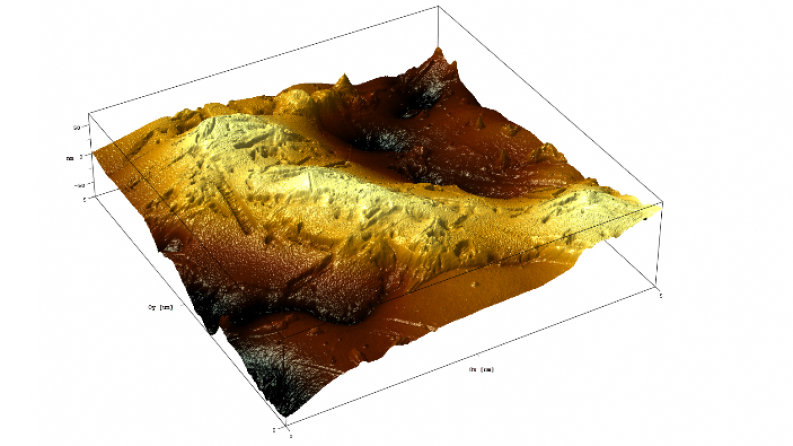
Objective of the project: The aim of this project is to develop multilayer polymer-metal nanocomposites by layer-by-layer assembly of functional polymers for their application in catalysis.
Relevance: Of great scientific and practical interest is synthetic polyampholytes capable of existing in various conformational and phase states, depending on changes in temperature, pH of the medium, type and concentration of low molecular weight salt, thermodynamic quality of the solvent. Representatives of fully charged macromolecules - highly charged polyampholytes consist of charged cationic and anionic monomers and have the ability to retain charges over a wide range of pH values. The behavior of highly charged polyampholytes depends on the composition of the copolymers and the distribution of monomer units. The presence of permanent charges contributes to the effective binding of metal ions, dyes and surfactants. Copolymers of sodium salt of 2-acrylamido-2-methylpropanesulfonate (AMPSNa) and (3-acrylamidopropyl)trimethylammonium (APTAC) are typical representatives of highly charged polyampholytes, which belong to less studied polymers. Recent studies show that the use of AMPSNa and APTACH as monomers makes it possible to synthesize polymer matrices with unique properties. The significance of studies on polymers based on AMPSNa and APTAC is evidenced by a number of studies devoted to nanocomposite materials. A review of the literature data shows that studies on the complexation of highly charged polyampholytes with metal ions, especially the preparation of multilayer catalytic films by the LbL method, have not been studied enough and publications are episodic. Thus, despite a wide range of polyelectrolytes, not all potentially applicable polymers for the production of LbL are used to obtain multilayer nanocatalysts.
Scientific adviser: Doctor of Chemical Sciences, Professor, Bagadat S Selenova
Results obtained: In this study, homopolymers based on strongly charged monomers APTAC and PAMPS were synthesized via radical polymerization, and their structure was confirmed by FTIR and NMR spectroscopy. Potentiometric, conductometric, and viscometric analyses demonstrated the ability of PAMPS to form complexes with copper and palladium ions, with an optimal molar ratio of 1:4. It was found that complex formation leads to a decrease in solution viscosity due to the formation of coordination bonds. Nanocomplexes PEI-CuNPs and PEI-PdNPs were synthesized, and their size characteristics and zeta potential were determined. Multilayer thin films were fabricated using the layer-by-layer deposition method, and optimal formation conditions along with the effect of adsorption time were established. Morphological analysis revealed uniform films with low surface roughness and evenly distributed spherical nanoparticles. The obtained multilayer structures exhibited catalytic activity and can be considered promising nanocatalysts for future applications.
List of publications with links to them
- Selenova B.S., Ayazbayeva A.Ye., Shakhvorostov A.V., Kabdrakhmanova S.K., Nauryzova S.Z., Kudaibergenov S.E. Preparation and study of the physicochemical characteristics of multilayer polymer composites based on poly(ethyleneimine)-stabilized copper nanoparticles and poly(sodium 2-acrylamide-2-methyl-1-propanesulfonate) // Chemical Bulletin of Kazakh National University. – 2021. – Issue 3. – P. 22–31. – DOI: https://doi.org/10.15328/cb1235