Kokzhide Hero
Scientific phase completed (2024–2025)

Kokzhide: systematic monitoring
of geoecological environment

Hydrogeological research as a foundation for sustainable development and water security in Western Kazakhstan.

Period

2024–2025

Status

Research

Focus

GIS Development

Next Step

2026–2028
Contribution to UN Sustainable Development Goals

6

Clean Water and Sanitation

9

Innovation & Infrastructure

13

Climate Action

15

Life on Land

17

Partnerships for Goals

Kokzhide Project as Satbayev University's Contribution to Sustainable Development

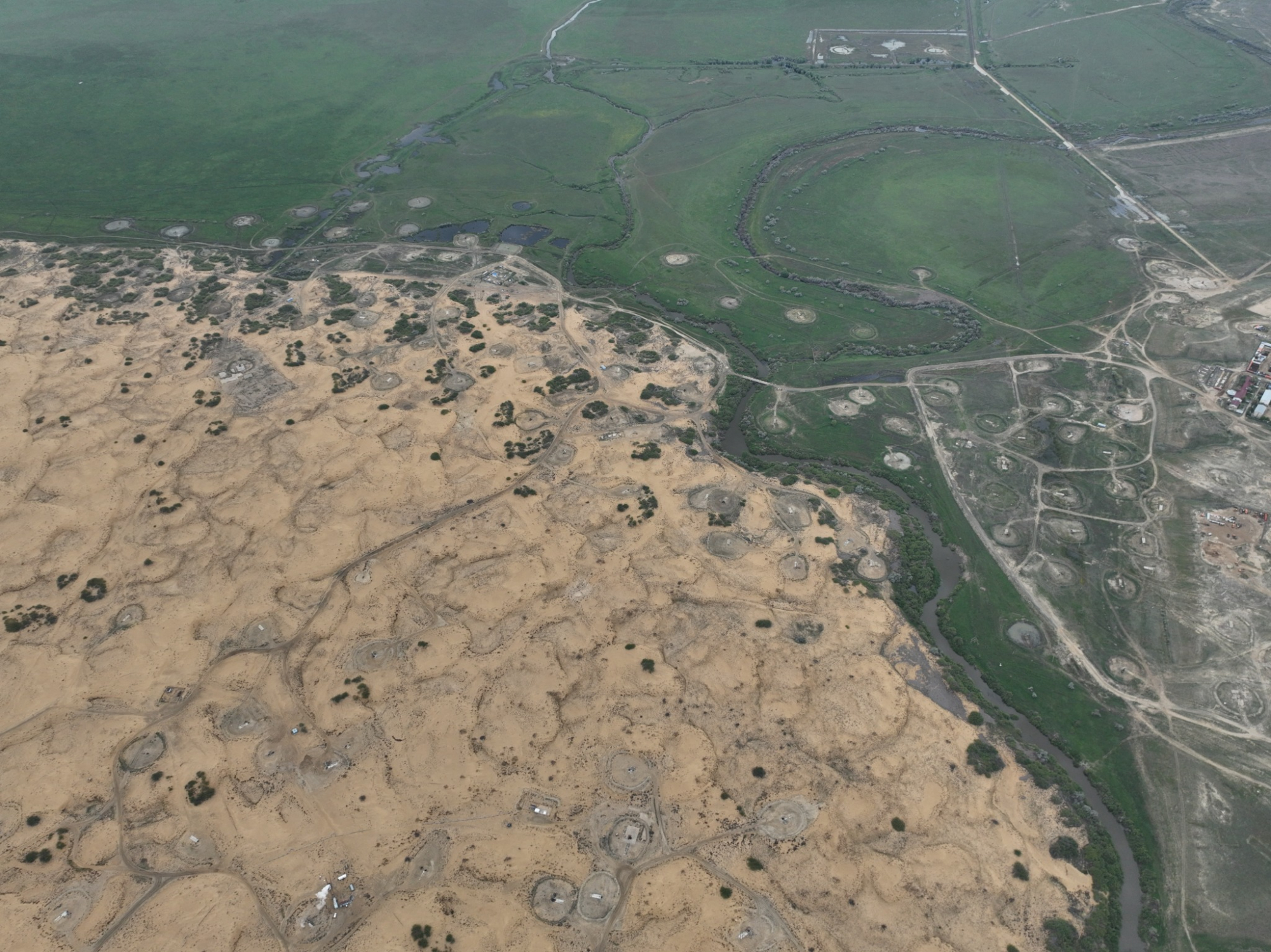
The University has already completed the basic research stage, substantiating the importance of systematic monitoring of the sand massif. Hydrogeological and geoecological studies have been conducted, the impact of subsoil use has been assessed, and the initial scientific base has been formed.

01

Strategic Resource

Freshwater reserve of Western Kazakhstan for sustainable drinking water supply.

02

Basis for Decisions

Scientific foundation for environmental regulation and rational subsoil use.

Scientific Research
Scientific Research

Why Kokzhide Research Has Strategic Importance

01

Strategic Resource

Kokzhide is considered one of the most significant reserves of fresh groundwater in Western Kazakhstan and a promising basis for sustainable drinking water supply in the region.

02

Technogenic Load

The area is under long-term subsoil use, requiring systematic scientific assessment of the potential impact on the geological environment, groundwater, and the natural-technogenic system as a whole.

03

Basis for Decisions

The research forms a scientific basis for decision-making in water security, environmental regulation, rational subsoil use, and long-term provision of quality drinking water to the population.

Project Phases

Completed

Phase 1: 2024–2025

Research Foundation

  • ✓ Justified need for systematic monitoring
  • ✓ Conducted hydrogeological & geoecological studies
  • ✓ Assessed subsoil use impact
  • ✓ Completed modeling
  • ✓ Formulated initial scientific base
Future

Phase 2: 2026–2028

Further Research

  • ⚡️ Study of aquifer system interconnections
  • ⚡️ Pollution mechanism assessment
  • ⚡️ Development of laboratory, geophysical & model base
  • ⚡️ Acquisition of new territorial data
  • ⚡️ Preparation of scientific basis for digital platform

Phase 3: Vision

Digital Platform

  • ○ Integration of accumulated & new data
  • ○ GIS environment development
  • ○ Digital visualization of results
  • ○ Foundation for systematic monitoring

Total Analyses & Sampling Volume

Laboratory and field analyses of key environmental components were conducted. Below are the total numbers of samples collected and analyzed.

361

Groundwater

561

Soils

198

Sedimentary Rocks

70

Vegetation

25

Surface Water

55

Bottom Sediments

10

Snow Cover

Completed Research

Hydrogeological Studies

Assessment of groundwater condition and characteristics in Kokzhide area.

Geoecological Studies

Analysis of natural-technogenic factors and environmental characteristics.

Subsoil Use Impact Assessment

Evaluation of subsoil use impact on environment and study area.

Process Modeling

Analytical and model-based work to support further decisions.

Scientific Base Formation

Collection and structuring of initial scientific data for next phase.

Systematic Monitoring Justification

Confirmation of need for systematic observation and analytics model.

Future Research 2026–2028

Experimental polygons & aquifer interconnection

Establishing polygons in technogenic load areas and studying hydrodynamic/hydrogeochemical links between aquifers, including the Emba River channel.

Groundwater recharge potential

Studies of recharge conditions of Albian aquifer groundwater from precipitation and surface runoff, especially during flood periods.

Sorption properties of rocks

Investigation of sorption properties of aeration zone deposits, groundwater, and productive Albian complex regarding various oil types.

Gas geochemical studies

Gas surveying in aeration and saturation zones at vulnerable sites to determine hydrocarbon gas content.

Fresh groundwater vulnerability assessment

Helium-based assessment of fresh groundwater protection to identify potential hydrocarbon contamination pathways.

Geophysical surveys & ERT

Geophysical surveys including electrical resistivity tomography to determine scale of historical oil contamination and its link to groundwater.

Hydrogeochemical & lithochemical studies

Laboratory analysis of groundwater, surface water, soils, rocks, petroleum products, and other pollutants.

Modeling, RS, digital maps & GIS

Geofiltration & geomigration modeling, remote sensing data interpretation, digital map creation, and GIS monitoring platform development.

Kokzhide — a scientific basis for decisions in water security, environmental regulation and sustainable resource management

The research establishes an evidence base for monitoring, risk assessment, digital support, and long-term management decisions.

01

Science

Comprehensive research base

02

Monitoring

Foundation for systematic observation

02

Management

Decision support for the territory

Scientific Research

Project Ecosystem & Partners

Kazhydrogeology KAZENERGY Kazakhoil Aktobe KMK Munai Urikhtau Operating Ada Oil CNPC-AMG